London, England / Syndication Cloud / February 18, 2026 / OrdinIQ
Getting caught with a flat tyre on a British motorway or country lane is more than inconvenient — it is also dangerous. Tyre-related defects remain a significant contributor to road risk in the UK, with official safety data from the Department for Transport identifying defective tyres as a contributory factor in injury collisions, and annual roadside assistance statistics from the RAC and AA consistently reporting tens of thousands of tyre-related callouts each year. Peer-reviewed research has shown that under-inflated tyres increase rolling resistance, extend braking distances, and impair vehicle handling stability (e.g., National Highway Traffic Safety Administration, 2009; European Commission transport safety studies), while laboratory testing demonstrates that even moderate under-inflation can significantly raise tyre temperature and structural stress, increasing the risk of failure. With tyre-related breakdowns accounting for over 51,500 roadside assistance calls in 2023 across the UK, having a reliable solution at hand has become more important than ever for British motorists.
Yes, Portable Cordless Air Compressors Can Fully Inflate Flat Tyres
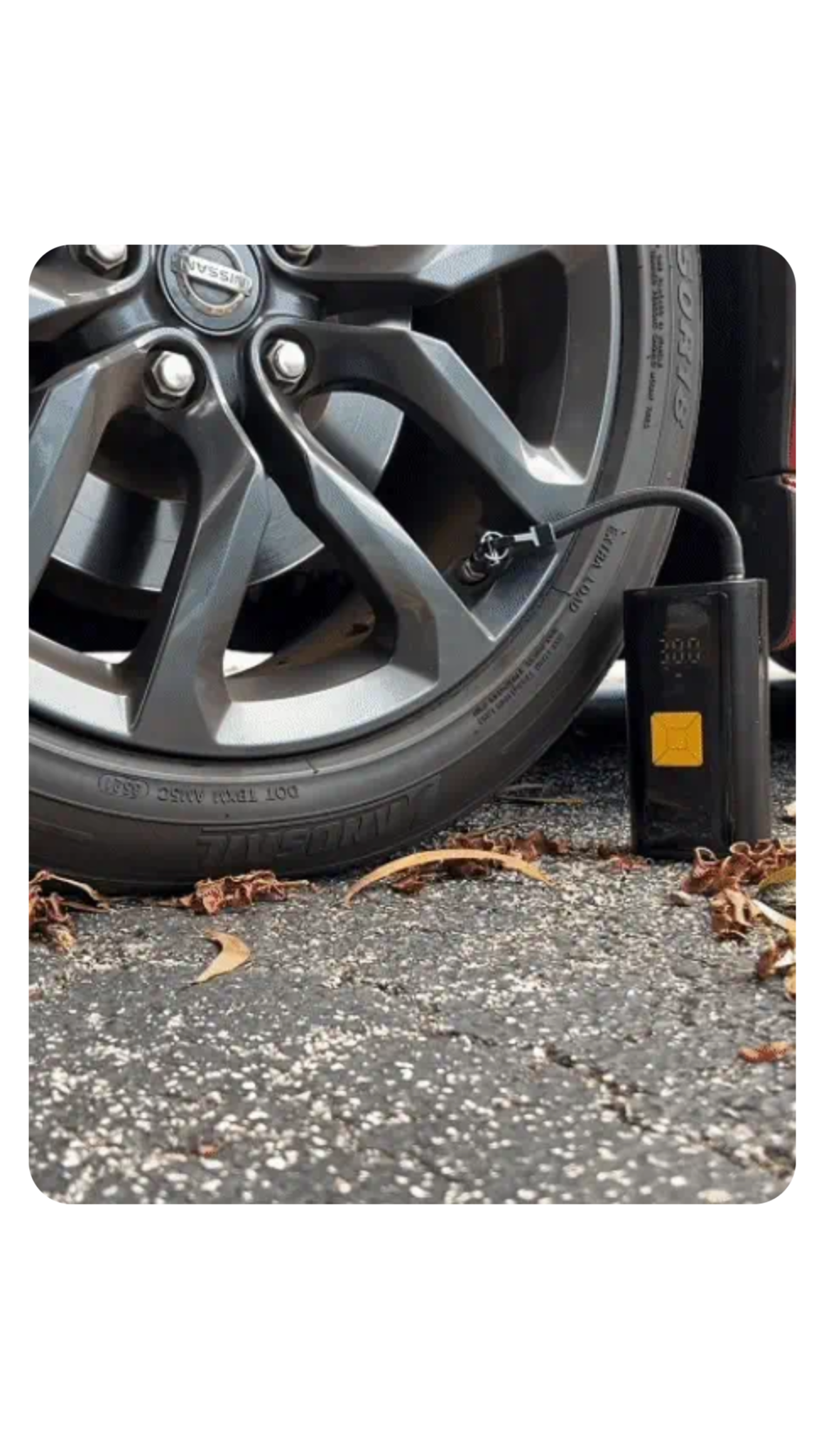
Portable cordless air compressors are capable of inflating flat tyres in the UK when used appropriately. Many modern units reach up to 150 PSI — more than sufficient for standard passenger vehicles, which typically require 30-35 PSI.
These compact devices have changed roadside tyre maintenance. Unlike traditional foot pumps or the need to locate a petrol station, cordless compressors provide immediate assistance wherever needed. Advances in micro-compressor engineering and lithium-ion battery performance have enabled high output from relatively small, portable units.
Real-world testing and manufacturer specifications indicate that quality portable compressors can manage genuine flat tyre situations, not just minor top-ups. This capability makes them particularly valuable for UK drivers navigating everything from urban streets to remote rural areas where assistance may be delayed.
How Long Does It Take to Inflate a Flat Tyre?
1. Inflation Times by Vehicle Type
Inflation times vary based on tyre volume and compressor output. Bicycles and road bikes typically inflate quickly, while motorcycle tyres can often be inflated in under five minutes. For standard passenger vehicles, a partially deflated tyre may take under a minute to several minutes, while a completely flat tyre can often be inflated to proper pressure in under 10 minutes, depending on compressor flow rate and tyre size.
Larger vehicles require more time. Van and light truck tyres may take 10-20 minutes, and some commercial vehicle tyres can exceed the practical limits of smaller portable compressors. However, for the majority of UK passenger cars, most quality portable compressors complete inflation well within 15 minutes.
2. Factors That Affect Inflation Speed
The Cubic Feet per Minute (CFM) rating directly influences inflation speed; higher CFM ratings deliver faster airflow. Ambient temperature also affects performance. Cold conditions — common during British winters — can reduce battery efficiency and slow inflation slightly.
Tyre condition is another variable. A tyre with a sealed puncture will inflate more efficiently than one that has been driven on while flat, as structural deformation can increase resistance. Compressor age, internal wear, and battery charge level also influence output consistency.
3. Power Source Considerations
Battery-powered units offer convenience but operate for a limited duration — typically 15-25 minutes per charge. For most passenger vehicles, this is sufficient for multiple inflations.
Many portable compressors offer multiple charging options: USB-C charging, UK plug adapters, and 12V vehicle leads. The 12V option provides extended or effectively unlimited runtime while the engine is running, making it suitable for larger tyres or multiple inflations in succession.
Key Features That Make Portable Compressors Effective
1. Pressure Capacity and Auto-Shut Off
Effective portable compressors typically offer pressure ranges up to 150 PSI, covering passenger vehicle requirements. Auto-shut-off systems stop inflation once a preset pressure is reached, reducing the risk of over-inflation. Over-pressurised tyres can reduce contact patch size, compromise grip, and increase blowout risk, as noted in vehicle safety research and tyre engineering literature.
Digital pressure displays provide more precise readings than many forecourt gauges, which may lack consistent calibration. Accurate pressure control supports compliance with manufacturer specifications and optimal vehicle dynamics.
2. Battery Life and Charging Options
Modern portable compressors use lithium-ion batteries ranging from approximately 2000mAh to over 9000mAh. Higher capacity batteries allow multiple inflation cycles before recharge. Charging times typically range from three to seven hours, depending on battery size and charging method.
USB-C connectivity enables charging from power banks and laptops, while UK mains adapters provide reliable home charging. 12V vehicle charging supports on-the-go readiness.
3. Built-in LED Lights for Emergency Use
Integrated LED lighting enhances roadside safety. White LEDs illuminate work areas during night breakdowns, and red flashing modes improve visibility to other drivers. Visibility is particularly important on rural roads and motorway hard shoulders, where reduced lighting conditions increase risk exposure.
Why UK Drivers Need Regular Tyre Pressure Maintenance
Safety and Legal Requirements
UK vehicles must be maintained in a roadworthy condition under the Road Traffic Act 1988. The Driver and Vehicle Standards Agency (DVSA) can issue penalties if tyres are deemed unsafe, including cases involving significant under-inflation where it compromises roadworthiness.
Peer-reviewed studies and government safety reports consistently show that under-inflated tyres reduce lateral stability, increase braking distance, and elevate blowout risk due to heat buildup and structural fatigue. Proper inflation is therefore both a legal and safety imperative.
Fuel Economy and Tyre Longevity Benefits
Research from the National Highway Traffic Safety Administration and European transport authorities has shown that under-inflation increases rolling resistance, reducing fuel efficiency. Estimates commonly place fuel economy losses at up to 3% for moderately under-inflated tyres.
Tyre manufacturers such as Michelin emphasise that correct pressure reduces uneven tread wear, extends tyre lifespan, and supports optimal grip and braking performance. Maintaining proper pressure therefore contributes to both economic and safety benefits.
What to Look for in a Quality Portable Air Compressor
1. PSI Range and Versatility
Choose compressors offering at least 100-150 PSI capacity to confidently support passenger vehicles, SUVs, and light commercial vehicles. Higher PSI capability also enables use with bicycles, sports equipment, and inflatables.
2. Included Adapters and Accessories
Adapter kits increase versatility. Important fittings include Schrader valves (standard for most vehicles), Presta valve adapters (for road bikes), needle adapters (for sports balls), and general inflation nozzles. Flexible hoses and deflation buttons enhance precision.
3. Charging Methods and Portability
Multiple charging options ensure operational readiness. USB-C charging, UK mains adapters, and 12V vehicle leads provide flexibility across scenarios. Compact dimensions — roughly 3 × 2 × 6 inches — typically balance portability with sufficient motor and battery capacity.
4. Digital Pressure Readings and Controls
Digital displays improve accuracy and usability. Pressure preset functionality allows users to select a target PSI and rely on auto-shut-off to stop inflation at the correct level. Some models include application-specific modes (car, motorcycle, bicycle, sports equipment) to streamline operation.
Portable Cordless Air Compressors Are Valuable Equipment for UK Motorists
Available safety evidence and engineering research support the value of portable cordless air compressors for UK drivers. The ability to restore correct tyre pressure promptly reduces roadside vulnerability, supports legal compliance, and mitigates safety risks associated with under-inflation. Their compact size, evolving battery performance, and precision controls make them practical tools for both routine tyre maintenance and unexpected roadside emergencies.
OrdinIQ
Chevalier House, 45-51 Chatham Road South
London
England
SE
United Kingdom